Generic filters
Search in excerpt
Generic filters
Search in excerpt

Research Project Update – WHS in Construction Subcontracting

As part of the Enforceable Undertaking (EU), Advanced Buildings and Restorations (ABR) engaged RMIT to undertake a research project into subcontractor WHS compliance in the NSW construction industry.

The project aims to:

  • Contribute to the prevention of workplace harm and incidents through improved subcontracting arrangements and management in the construction industry
  • Understand the challenges and drivers for WHS compliance in subcontracting arrangements and identify effective solutions to achieve WHS compliance of subcontractors.

Once completed, the project will include 4 phases. Three of the four phases have been completed as of February 2025. Firstly, the project was co-designed between RMIT and the Centre for WHS to identify a research plan and key milestones. The research project also involved the formation of an Industry Advisory Group, consisting of members of the NSW construction industry, the Centre for WHS and Advanced Buildings and Restorations.

Phase 2 was a comprehensive literature review, which identified a total of 38 factors that have the potential to influence subcontractor WHS compliance in the construction industry. These factors reflect five levels of influence, including:

  • regulatory effectiveness
  • industry context and supply chain environment
  • subcontractor management practices by principal contractors
  • workplace environment, and subcontractor knowledge, capability and attitude.

The third phase of the project involved conducting an online survey to:

  • assess the extent to which the factors identified in the literature review are currently being effectively addressed in the NSW construction industry
  • highlight areas that need to be focused on for improvement, and
  • identify aspects that warrant further exploration in the subsequent project stage of conducting interviews.

    The survey instrument consisted of four sections, including:

  • section 1 capturing participants’ demographic information
  • section 2 exploring participants’ general perceptions of subcontractor WHS compliance in the NSW construction industry
  • section 3 examining participants’ perceptions of how well each of the 38 identified factors is currently being addressed in the NSW construction industry
  • section 4 using one open-ended question to explore participants’ opinions on additional considerations for ensuring subcontractor WHS compliance in the NSW construction industry.

The target participants for this survey were principal contractors and subcontractors working in the NSW construction industry. The survey was conducted between 9 September and18 November 2024.

The online survey received a total of 203 responses, exceeding the minimum of 196, which was required for a valid sample size.

The final phase of the research project will involve interviews with construction industry stakeholders to gather more insight into their perceptions on subcontractor WHS compliance.  A system dynamics model and its validation through focus groups will form the remainder of Phase 4.

The final phase is currently scheduled to commence in late February 2025, culminating in the presentation of findings to industry stakeholders and SafeWork NSW.

Demographic information

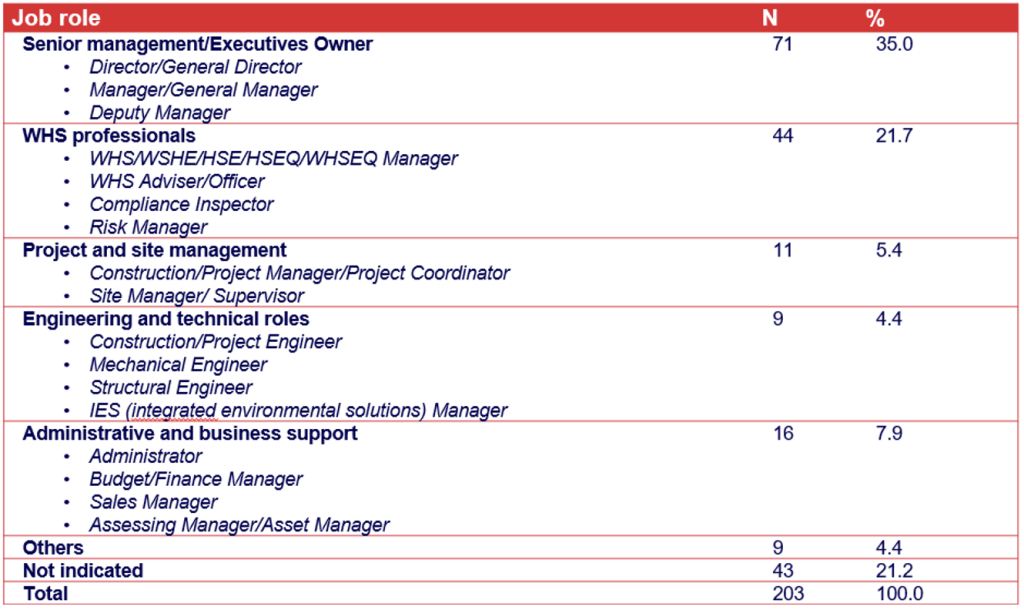
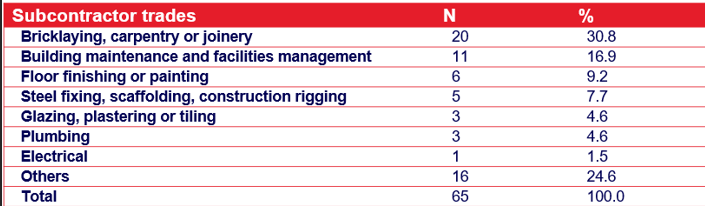
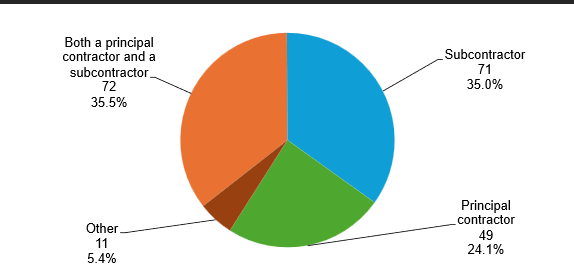
The data set allows the research team to identify demographics, such as the job roles of those that completed the survey, as shown in Figure 1.

The data also allows the researchers to identify the job roles of the survey respondents. This is presented in Table 2.

Data Analysis and Preliminary Results

The following are preliminary results identified from the survey response data.

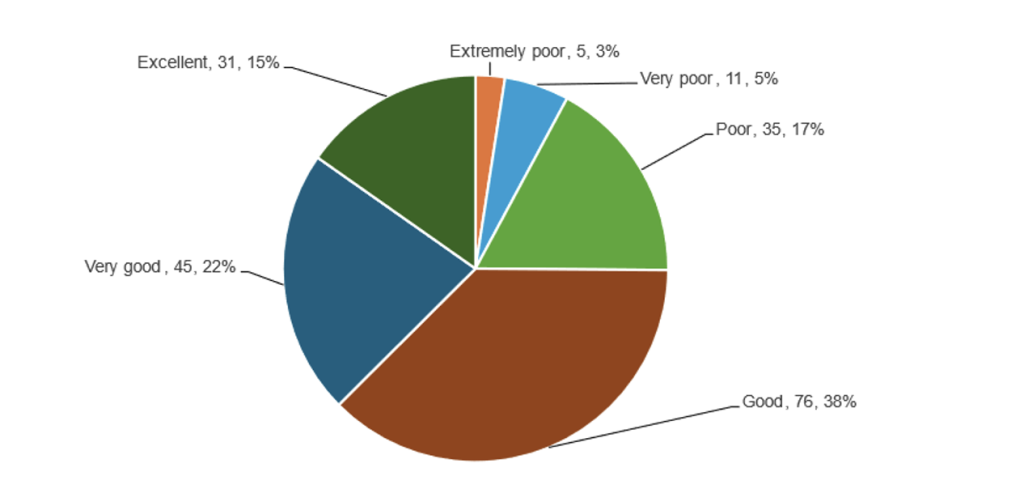
Figure 1 shows the responses to the question “How would you rate subcontractors’ WHS compliance performance in general”?

Figure 1 shows that the majority of respondents (75%) perceive that subcontractor compliance is good, very good or excellent while 25% feel that subcontractor compliance is poor, very poor or extremely poor.

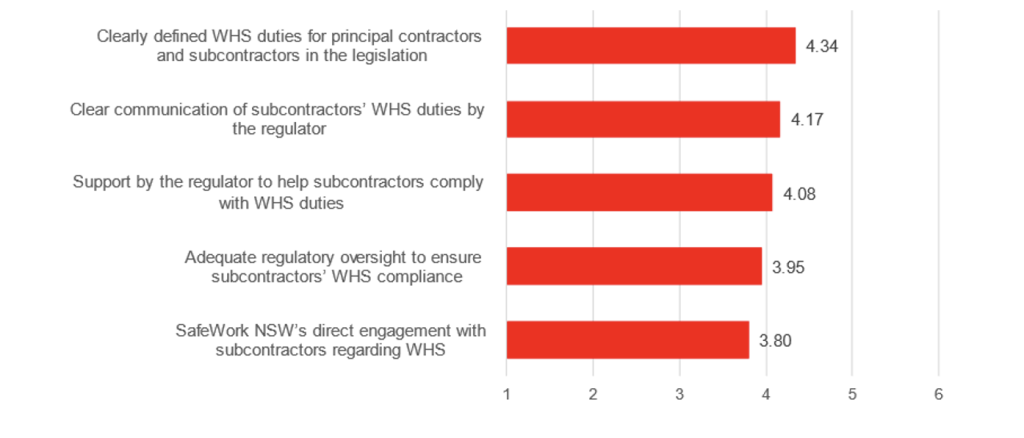
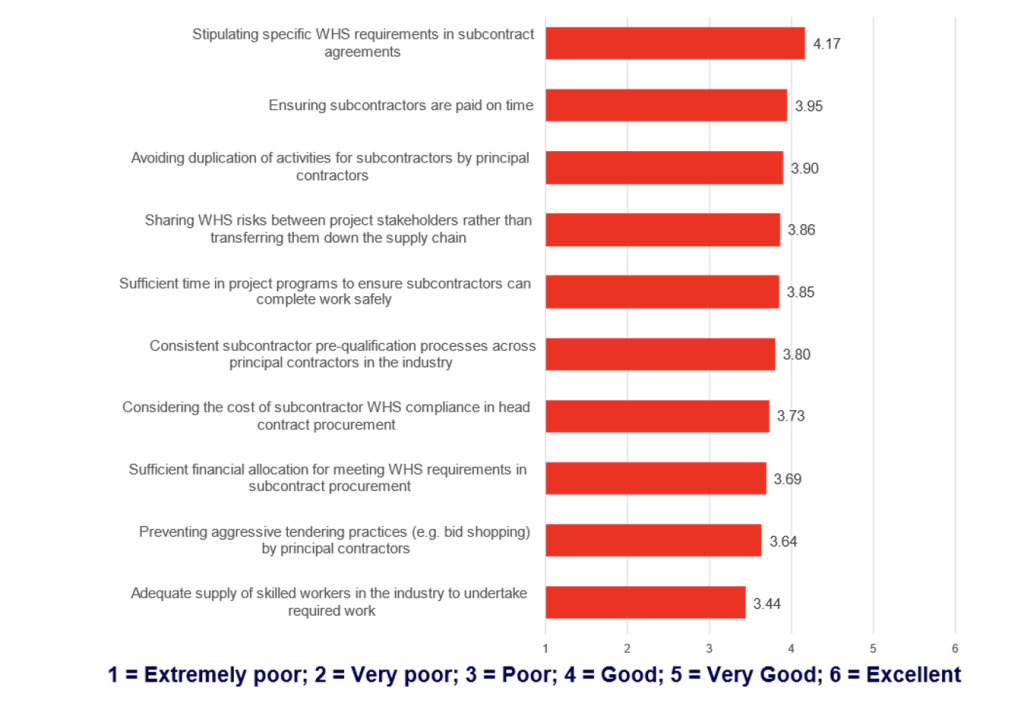
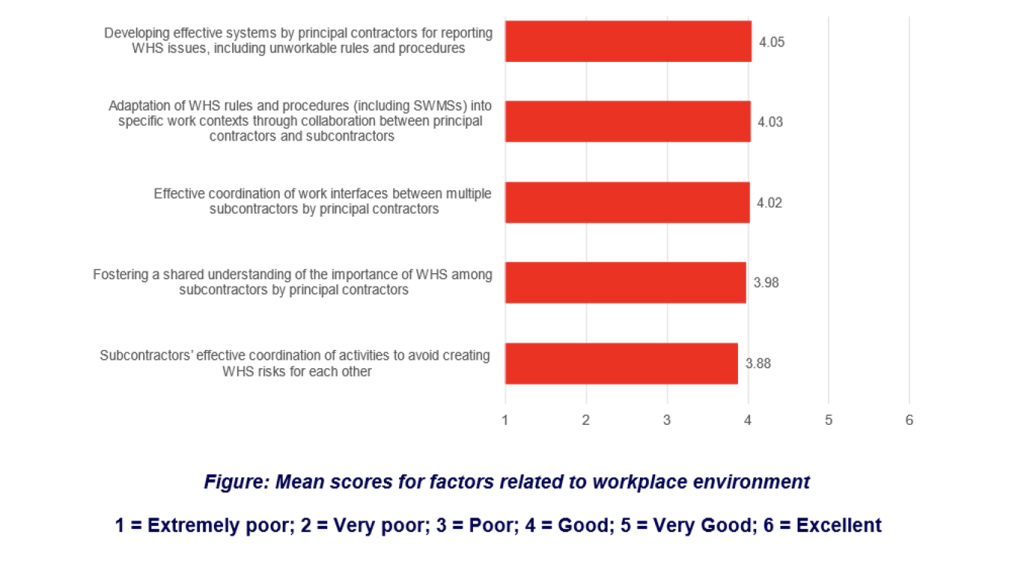
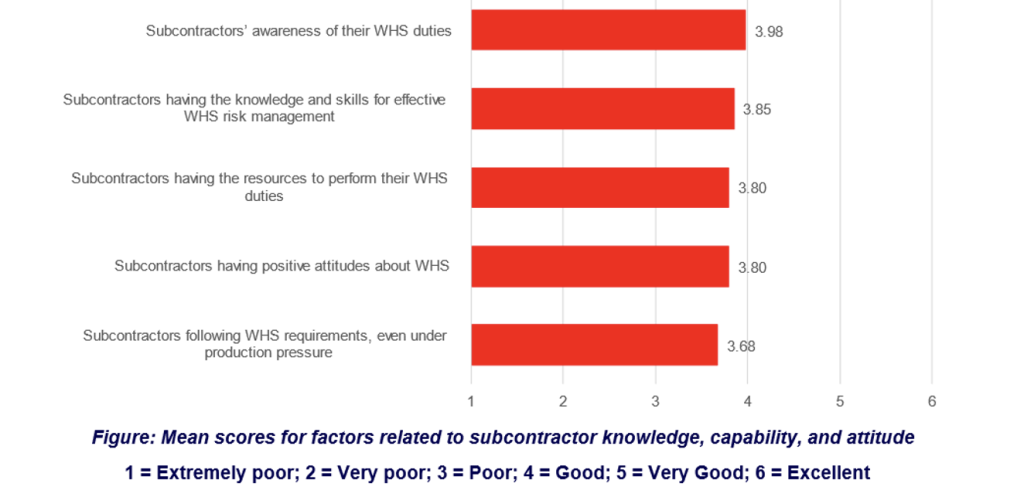
Figures 2 – 6 provide some further insight into respondent perceptions of how well factors in relation to the following aspects are currently being addressed in the NSW construction industry:

  • Regulatory effectiveness
  • Industry context and supply chain environment
  • Subcontractor management practice by principal contractors
  • Workplace environment
  • Subcontractor knowledge, capability and attitude
Figure 2 – Regulatory Effectiveness
Figure 4 - Workplace environment
Figure 5 - Subcontractor knowledge, capability and attitude

The following additional data analysis has been completed as part of the research project, at the time of writing this paper.

  • Comparison of responses by type of organisation
  • Comparison of responses by construction sector
  • Comparison of responses by company size
  • Comparison of responses by respondents’ perceptions of subcontractor WHS compliance performance

The survey included an open ended question as follows: “Is there anything else that should be considered to ensure subcontractor WHS compliance in the NSW construction industry?”

There were 62 qualitative responses provided for this question, which have been analysed to identify any themes. The following is a summary of the 12 themes regarding additional areas that should be considered to ensure subcontractor WHS compliance, identified from the responses:

  1. training and education
  2. simplification of WHS management processes
  3. inspections and audits
  4. accountability, incentives and support
  5. collaborative WHS culture and shared responsibility
  6. differences in WHS attitudes and competency across the industry
  7. fostering regulatory trust
  8. insurance and legal compliance
  9. prompt payment
  10. clear WHS expectations in sub-contracts
  11. leveraging technology, and
  12. psychosocial impacts.

Next stage of the research project

The project aims to progress with Phase 4 (interviews of construction industry stakeholders) in late February, 2025. A system dynamics model will be developed from analysing t the interview data and focus groups will be conducted to review and validate the system dynamics model.

Once this phase is completed, findings and recommendations will be present to SafeWork NSW.

A further article will be provided once the research project is completed, in October 2025.

Author – Adam Eyles

SPECIALISTS
Adam Eyles

Share this article

OUR SECTORS

Industry Specialisation

ARA Building Services is a versatile provider of building maintenance and remedial construction solutions, serving a diverse range of sectors including commercial, retail, government and education. 

ara-sector-Retail

Retail

From retail shop fit-outs to planned maintenance services.

ara-sector-Education

Education

ARA Building Services can provide savings to the education sector through innovative solutions.

ara-sector-Government

Government

ARA Building Services has the skills, processes and focus on safety and quality to undertake any government work.

ara-sector-Commercial

Commercial

From commercial fit-outs to remedial construction and maintenance services on commercial buildings, ARA Building Services has undertaken many commercial projects.